Our booking recommendation: the tour of the government district, plenary chamber and dome, with free cancellation up to 4 days before. Book this Compare options
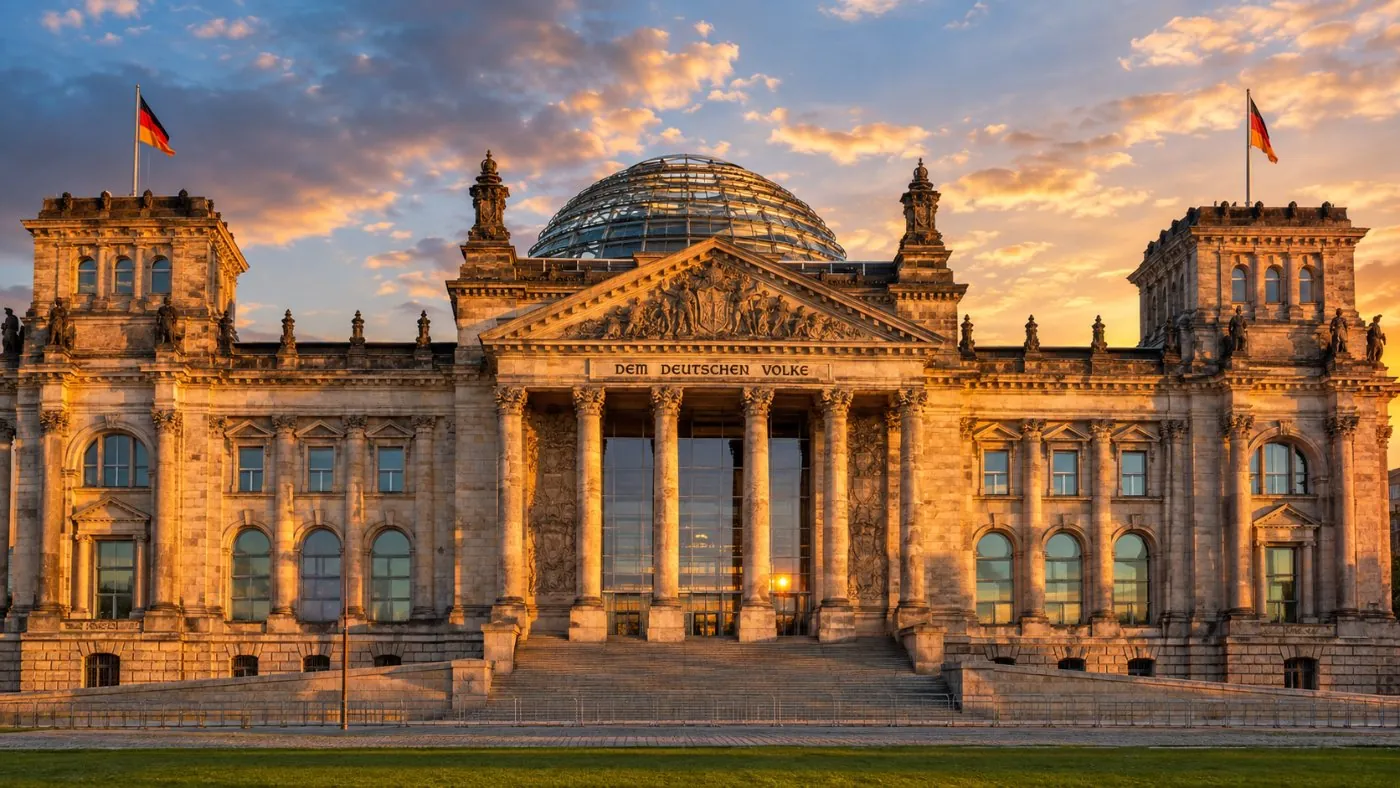
Anyone who visits the dome is standing on a building with a turbulent past. Paul Wallot built it for the parliament of the German Empire, the Weimar Republic was proclaimed from its window, the Nazis exploited the 1933 fire to suspend civil rights, and after the war, the building stood in ruins on the border between East and West.
It was only after reunification that the building resumed its role as the seat of parliament. All dates in this guide come from publications by the Bundestag, the Federal Agency for Civic Education and the German Historical Museum. Where sources differ, we say so.
The short answer
The Reichstag Building was constructed between 1884 and 1894 to designs by Paul Wallot. It is famous because key moments in German history took place here: the proclamation of the Republic in 1918, the Reichstag fire of 1933, the capture in 1945, the celebration of unity in 1990 and the wrapping by Christo and Jeanne-Claude in 1995. The building still stands, though it has undergone two major renovations. Since 19 April 1999, it has been the seat of the German Bundestag.
Why is the Reichstag so famous?
Because this building encapsulates over a century of German history, from the imperial era through dictatorship, war and division to the democracy of a reunified Germany.
The Reichstag Building served as the parliament of the German Empire and the Weimar Republic, was the scene of the fire that helped the Nazis consolidate power, was captured by the Red Army in 1945 and, after 1961, stood right by the Wall. Today, the Bundestag meets here, and the glass dome is one of Berlin’s most iconic images. The table shows the key milestones.
| Date | Event |
|---|---|
| 9 June 1884 | Groundbreaking ceremony attended by Kaiser Wilhelm I and Bismarck |
| 5 December 1894 | Final stone laid, Paul Wallot’s building is complete |
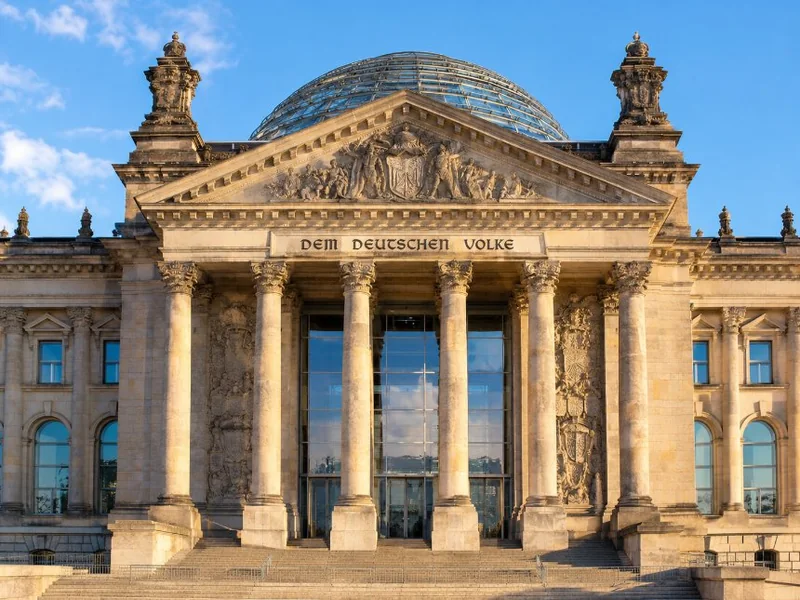
| 1916 | The inscription "Dem Deutschen Volke" (To the German People) appears on the facade |
| 9 November 1918 | Philipp Scheidemann proclaims the Republic |
| 27/28 February 1933 | Reichstag fire, followed by the Reichstag Fire Decree on 28 February |
| 30 April to 2 May 1945 | Fighting over the building, capture by Soviet troops |
| 1955 to 1973 | Reconstruction decision and renovation according to Paul Baumgarten’s plans |
| 3 and 4 October 1990 | Flag of Unity in front of the west portal, first session of the all-German parliament |
| 20 June 1991 | The Bundestag decides to relocate to Berlin |
| June/July 1995 | The wrapped Reichstag by Christo and Jeanne-Claude |
| 19 April 1999 | The Bundestag takes over the rebuilt building with its new dome |
When was the Reichstag built?
From 1884 to 1894. The foundation stone was laid on 9 June 1884, and the capstone on 5 December 1894. The architect was Paul Wallot.
Wallot had won the architectural competition in 1882, which attracted nearly 200 entries. Emperor Wilhelm I and Chancellor Otto von Bismarck attended the foundation stone ceremony. Ten years later, the building for the Imperial Parliament was complete.
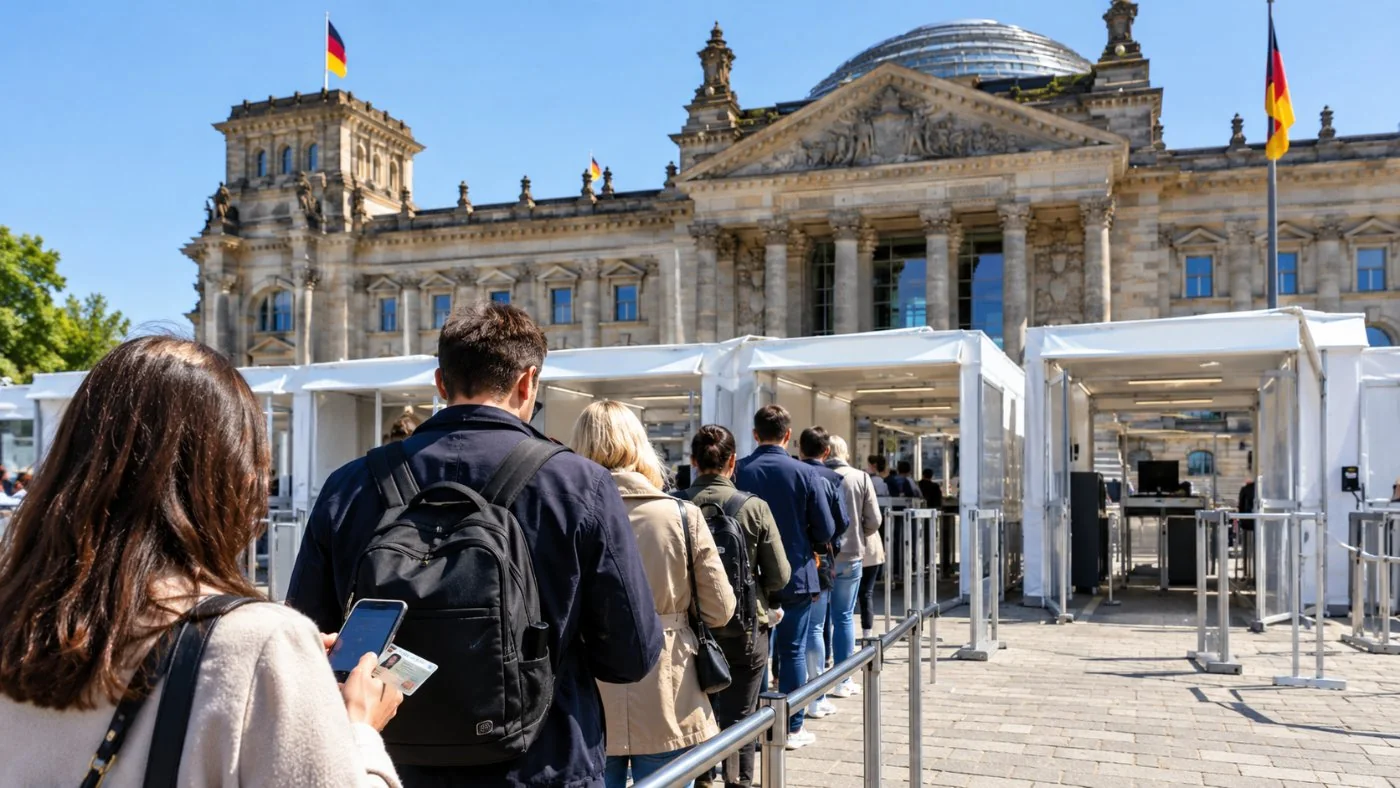
The famous inscription "Dem Deutschen Volke" above the west portal was not yet there at the time. It was only added in 1916, in the middle of the First World War. Today, visitors to the dome enter the building right beneath this inscription.
What does Reichstag mean, and are the Bundestag and Reichstag the same thing?
No. The Bundestag is the parliament, while the Reichstag Building is the building where it has met since 1999. "Reichstag" originally means something like assembly of the realm.
The word combines ‘Reich’ (realm or state) and ‘Tag’ in the old sense of assembly, not calendar day. The Duden lists several historical meanings: the assembly of the imperial estates before 1806 and the parliament from 1867 or 1871 to 1945. And it lists the current one: the building in Berlin where the Bundestag has held its plenary sessions since 1999.
Officially the building is called the Reichstag Building. When Berliners say ‘der Reichstag’, they almost always mean the building, not the parliament. It kept its name from the imperial era, but the parliament inside is the Bundestag.
What happened at the Reichstag on 9 November 1918?
Philipp Scheidemann proclaimed the republic from a window or the west balcony of the Reichstag Building.
On 9 November 1918, the Social Democrat Philipp Scheidemann proclaimed the republic from the Reichstag Building. Bundestag sources mention a window or the west balcony. This made the building, originally constructed for the parliament of the German Empire, the parliamentary seat of the Weimar Republic.
On a guided tour of the Reichstag and government district , you’ll hear this story first-hand before heading to the plenary chamber, the roof terrace and the dome.
History on the spot: guided tours of the government district, plenary chamber and dome, in German or English.
Book thisWho set fire to the Reichstag?
At the scene of the crime, the Dutchman Marinus van der Lubbe was arrested and later executed. Historians still debate whether he acted alone.
In the night from 27 to 28 February 1933, the Reichstag Building burned and the plenary chamber was destroyed. Marinus van der Lubbe was arrested inside the building, convicted and executed in January 1934. His co-defendants, Ernst Torgler and three Bulgarian communists, were acquitted. Who was truly behind the fire is still debated today.
What is undisputed are the consequences. Already on 28 February 1933, the Reich President issued the ‘Decree for the Protection of People and State’, known as the Reichstag Fire Decree, which suspended civil rights. On 23 March 1933, the Enabling Act was passed, not in the damaged Reichstag but in the Kroll Opera House opposite.
What happened to the Reichstag in 1945?
Soviet troops fought for the building from 30 April and captured it on 2 May 1945. The famous flag photo was taken during a re-enacted scene.
According to the Bundestag, a flag was already raised on 30 April. The German Historical Museum dates the well-known photo by Yevgeny Khaldei to 2 May 1945. The Bundestag states that the shot was staged and later retouched.
From these days also date the inscriptions left by Soviet soldiers: names, hometowns and messages in Cyrillic, written in chalk and coal. They were discovered during Norman Foster’s renovation behind the 1960s cladding and deliberately preserved. We could not confirm whether you can see them on a dome-only visit. Since they are inside the building, a guided tour is the more likely way.
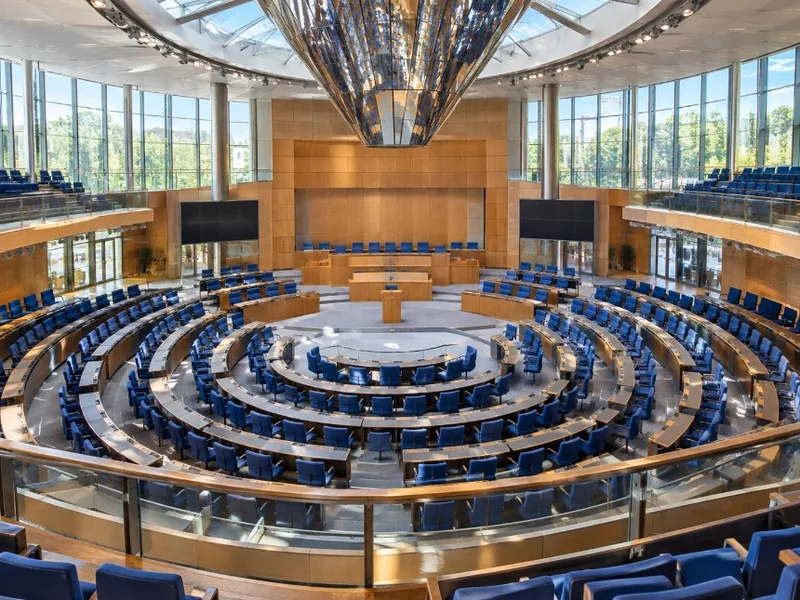
Lecture in the plenary chamber on the history of parliament and Foster’s renovation, in German, with roof terrace and dome access.
Book thisIs the original Reichstag building still standing?
Yes, Paul Wallot’s building still stands. However, it was extensively rebuilt after the war and again in the 1990s, and the original dome no longer exists.
After 1945, the building was a ruin; the remains of the old dome were removed after the war. On 9 September 1948, Ernst Reuter delivered his famous ‘Peoples of the world’ speech in front of the ruins. In 1955, the Bundestag decided to rebuild it according to Paul Baumgarten’s plans, completing the work in 1973. Sources vary on the exact dates in between, but reconstruction is confirmed to have taken place from the late 1950s and 1960s onwards.
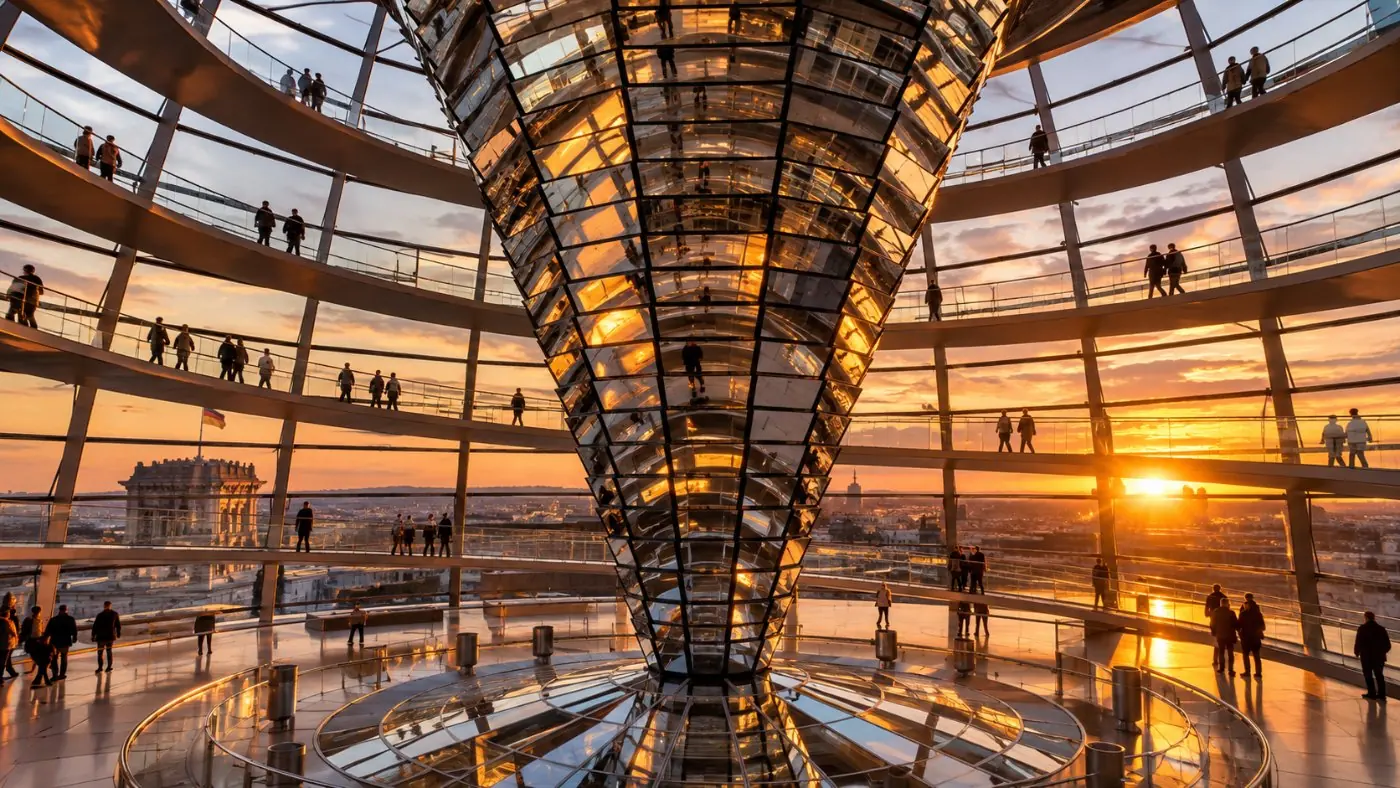
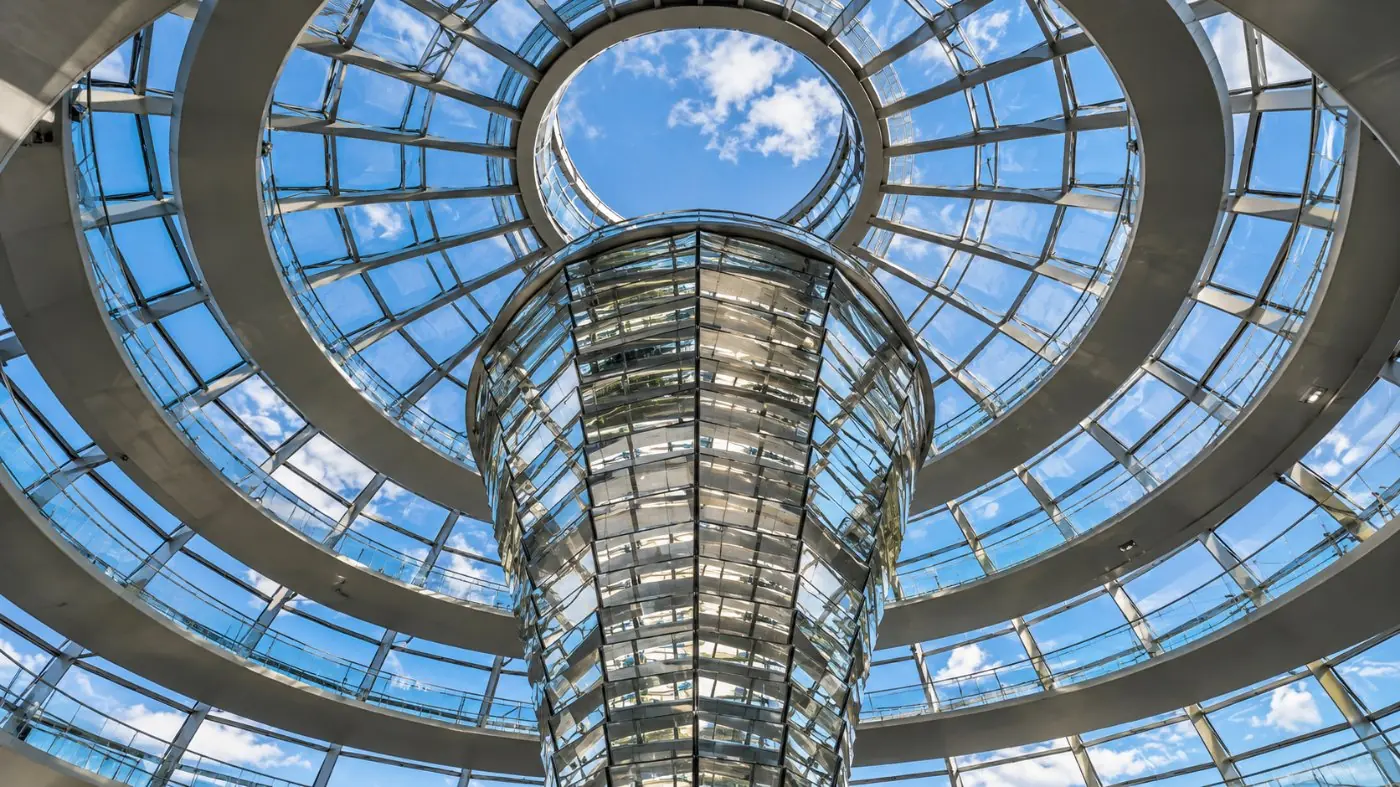
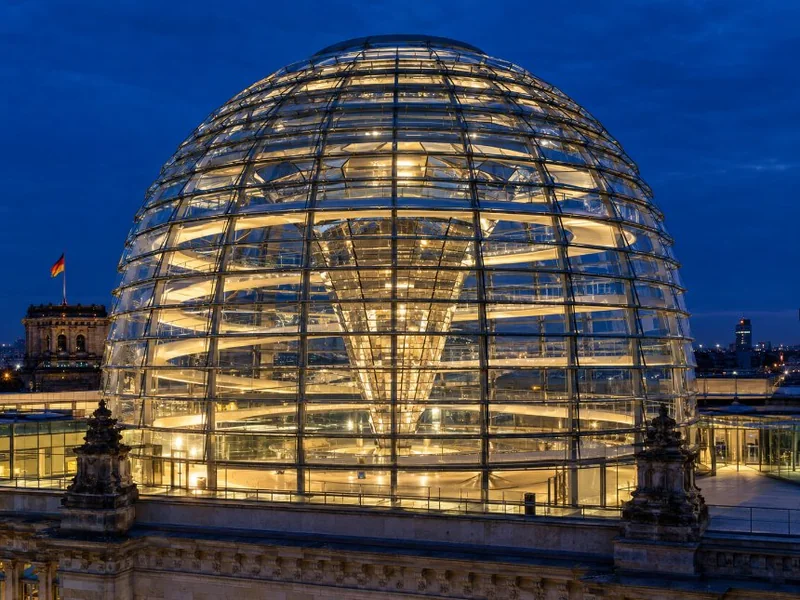
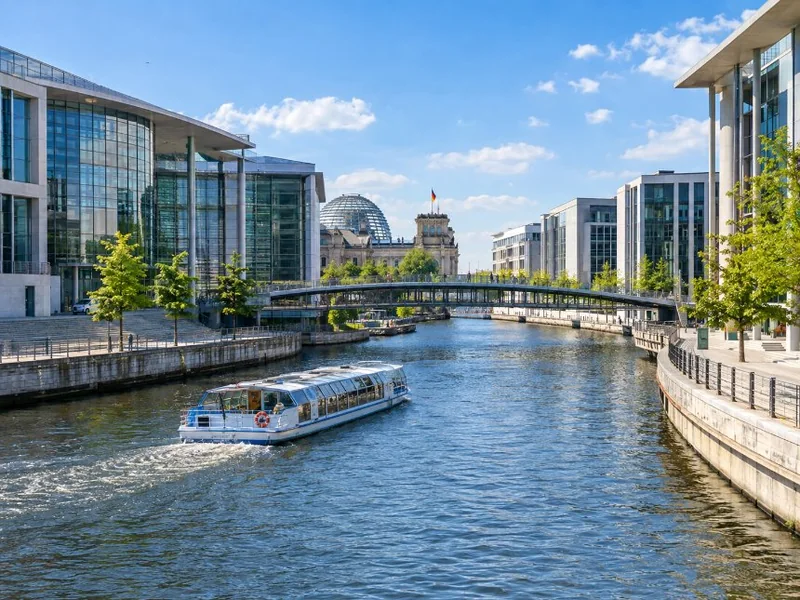
From 1961, the building stood right next to the death strip. The Four Powers Agreement of 1971 ruled out Bundestag plenary sessions there. A section of the hinterland wall is preserved today in the Marie-Elisabeth-Lüders-Haus next door. The building’s current appearance, with its glass dome, is thanks to Norman Foster’s renovation, which you can explore in more detail in our guide to the dome’s architecture .
How did the Reichstag become a parliament again?
With reunification in 1990, the relocation decision in 1991 and Norman Foster’s renovation. On 19 April 1999, the Bundestag took over the building.
On the night of 3 October 1990, the 60-square-metre Flag of Unity was hoisted in front of the west portal before hundreds of thousands of people. It has flown there ever since on a 28.5-metre-high mast. On 4 October 1990, the first all-German parliament convened in the Reichstag Building, and on 20 December 1990, the first freely elected all-German Bundestag held its constituent session. On 20 June 1991, the Bundestag voted 338 to 320 in favour of relocating to Berlin.
In 1995, Christo and Jeanne-Claude wrapped the building. The Bundestag had approved the project on 25 February 1994; from 24 June 1995, the structure was fully covered, and dismantling began on 7 July. For 14 days, it stood shrouded in around 100,000 square metres of fabric and 15,600 metres of blue rope, attracting over five million visitors. The artists funded it themselves. On 19 April 1999, Foster handed the symbolic key to Bundestag President Wolfgang Thierse, and in September 1999, regular parliamentary work began in Berlin. You can find an exhibition on the history of the building at the level of the roof terrace, while the Bundestag’s exhibition 'Wege, Irrwege, Umwege' is on display at the Deutscher Dom on Gendarmenmarkt.
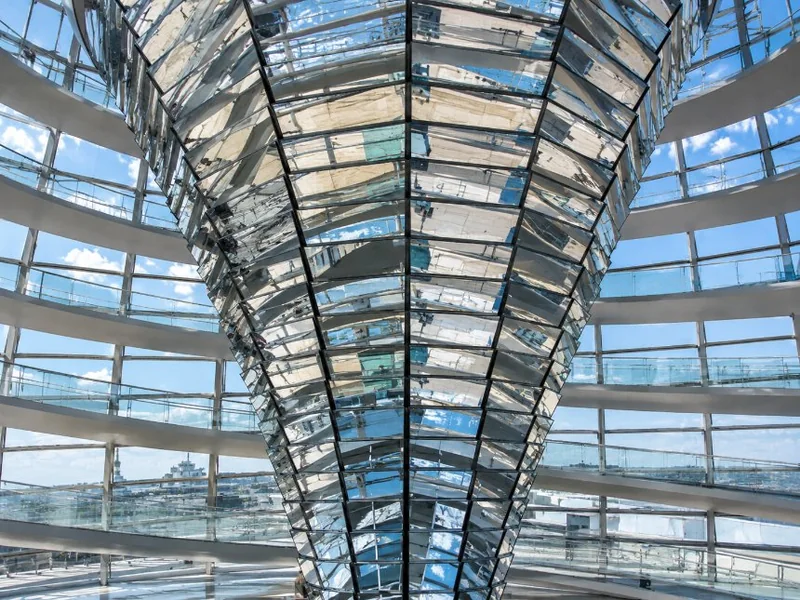
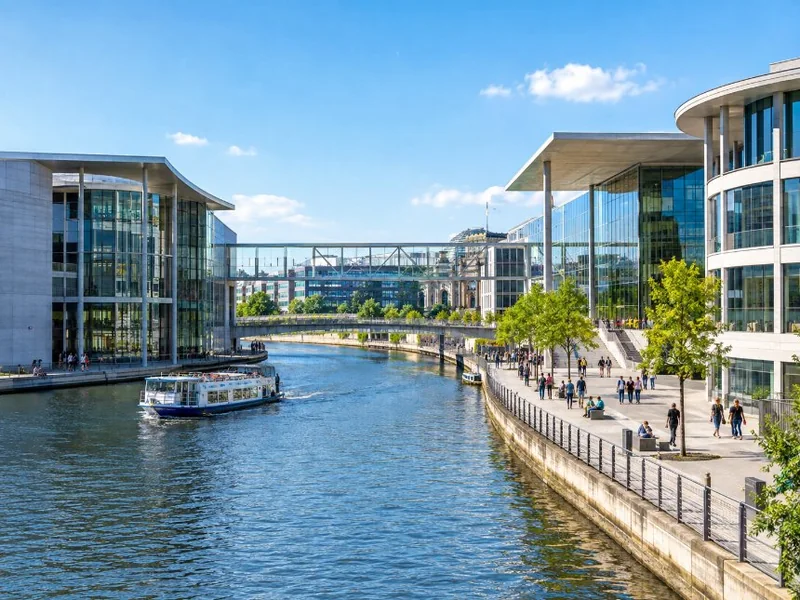
From Brandenburg Gate, across the former sector boundary to the Reichstag: government district tour with roof terrace and dome.
Book thisFrequently asked questions
Who built the Reichstag?
Paul Wallot, who won the architectural competition in 1882. Construction took place from 1884 to 1894.
When was the inscription "Dem Deutschen Volke" added to the facade?
1916, during the First World War, more than twenty years after completion.
How long was the Reichstag wrapped?
14 days in the summer of 1995. It was fully wrapped from 24 June, and the removal began on 7 July.
Since when has the Bundestag met in the Reichstag Building?
The Bundestag took over the renovated building on 19 April 1999, and regular parliamentary work in Berlin began in September 1999.
Ready to book
Select your tour
The provider handles registration with the Bundestag. Booked via GetYourGuide.
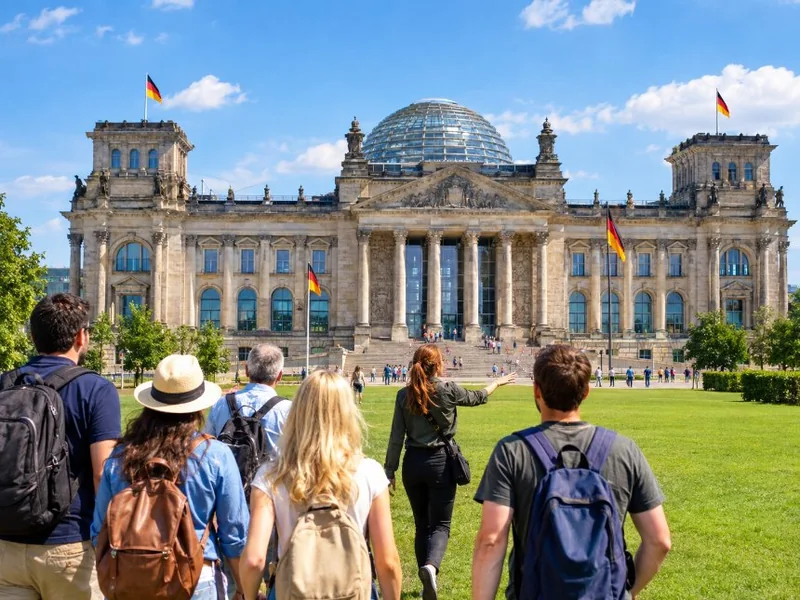
Reichstag, dome and government district with a guide
- Guided tour of the government district, in German or English
- The provider handles registration with the Bundestag
- Per the listing: plenary chamber, roof terrace and glass dome
Plenary chamber talk, dome and Spree riverbank
A walk along the Spree through the government district, followed by a talk in the plenary chamber about the parliament and its renovation, and finally the roof terrace and dome
Government district tour and dome visit
A guided tour and the dome; the German version includes a talk in the plenary chamber, the English version includes stories on the roof terrace